


When a conversation creates an opportunity
Imagine an ordinary day in another country: you need a jacket, a phone repair, a haircut or information about your hotel. You are ready to pay, but unsure that you will be understood. We build ESX for these everyday situations, helping people approach businesses and businesses understand their customers.

The barrier starts before the first question
A shopper may walk past a store because they worry about explaining a size or understanding a fast reply. The business never discovers that someone was interested.
Comfortable communication means more than finding a shop or restroom. It helps people compare options, ask about conditions and make their own decisions.
Example 1. Choosing clothes

A customer likes a jacket but needs a larger size, another color or information about the fabric. Gestures may leave these details unclear.
In chat they can ask: “Do you have XL?”, “Is it suitable for rain?” and “May I try another color?” Clear requests help the seller suggest options and the buyer decide.
Example 2. Buying electronics

Chargers or headphones may look similar, yet compatibility and what is included matter. A customer may leave rather than risk choosing incorrectly.
They can type the device model and ask about the connector, contents and warranty terms. Before paying, both sides can confirm the model, price and conditions.
Example 3. Booking a service

Someone wants a haircut but cannot explain the length, ask for an appointment or understand the price. Repair services raise similar questions.
Messages let them discuss timing, preferences, estimated cost and duration: “Only three centimeters, please” or “Tell me the repair price first.” Both sides gain clearer expectations.
Example 4. Cafés and hotels
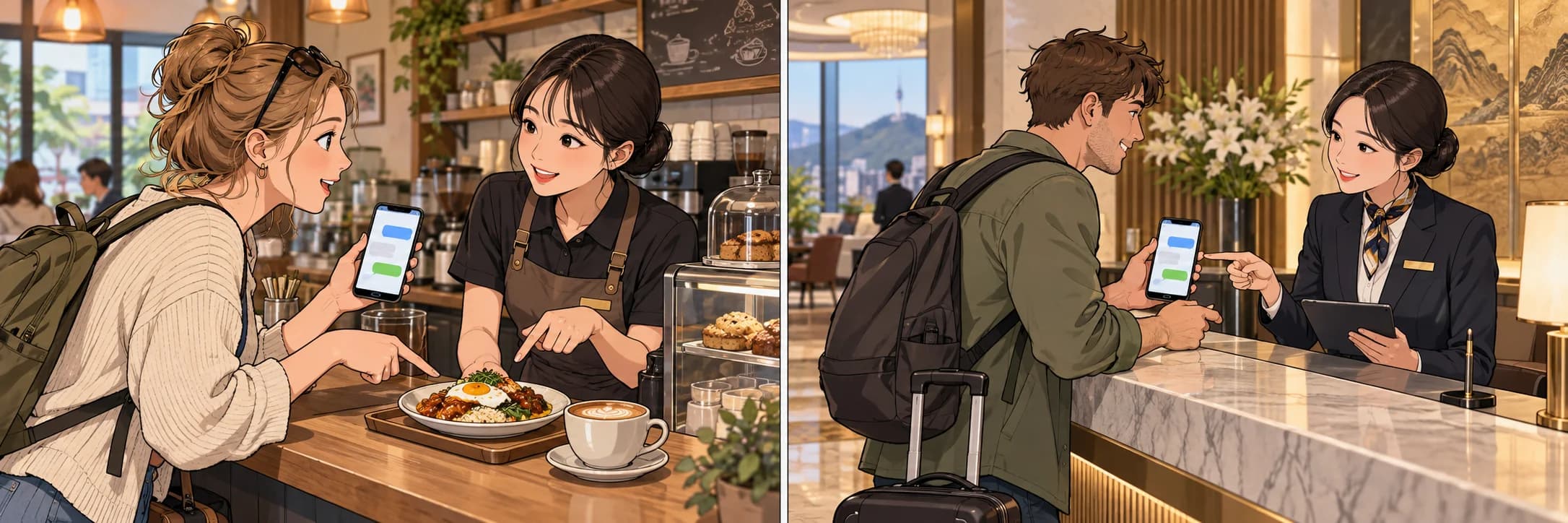
A café guest may ask about spice levels, ingredients or takeaway. A hotel guest may need breakfast times, luggage storage or late checkout conditions.
Chat provides time to phrase a request and clarify the answer. Ingredients, restrictions and extra charges should still be explicitly confirmed with staff.
Example 5. Renting skis in the mountains

A visitor wants skis but needs to explain boot size, experience and rental duration. In chat they can ask: “I need a set for two hours. Are boots and a helmet included?”
Staff can clarify the request, help choose equipment and explain returns, deposits and payment. The visitor understands the offer and the rental business can serve an international customer.
Example 6. Renting a board by the sea

A beach visitor wants a board but is unsure which suits their experience or what rental costs. They can ask through ESX: “I’m a beginner. Which board do you suggest? Can I book a lesson?”
Messages help clarify duration, included equipment, deposit and return location. Staff or an instructor explain local conditions and rules, while the customer asks questions before paying.
Example 7. Talking to the police

A traveler has lost a bag but struggles to describe it and explain where they last saw it. They can write: “I lost a black bag. I last had it near the station around three in the afternoon,” then clarify details when the officer asks questions.
ESX can support communication if the officer agrees to use the chat. It does not submit a police report or dispatch assistance; ask the officer about the next steps and how to register the report.
Opportunities for businesses

Language barriers can hide demand. An accessible conversation helps a business understand enquiries, explain its offer and serve international customers.
More enquiries, purchases and return visits are our aim, not a guaranteed revenue increase. Results also depend on products, pricing and service. ESX supports the moment when understanding matters.
Start with a QR code
Open an ESX chat, show the other person its QR code, choose your conversation language and exchange messages. Ask one specific question at a time.
We want everyday life to feel more independent and businesses to feel more approachable: more understandable conversations and more chances for needs and offers to meet.