
English
◎
Choose your languageYour language. Your space.
South Korea

Find your Korea

Traditions, experiences and places to come back to.

South Korea: tradition, city life and nature

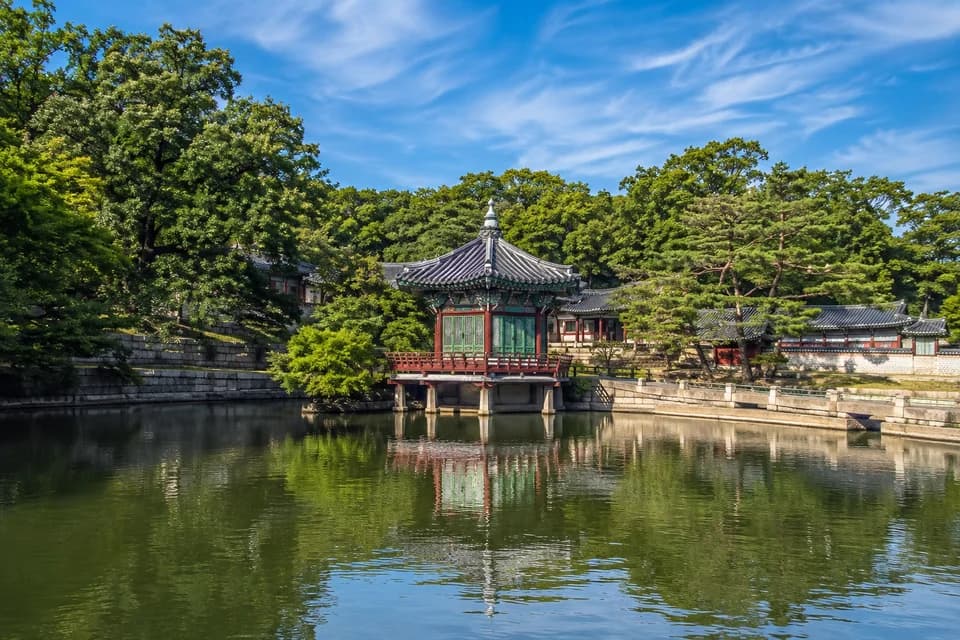
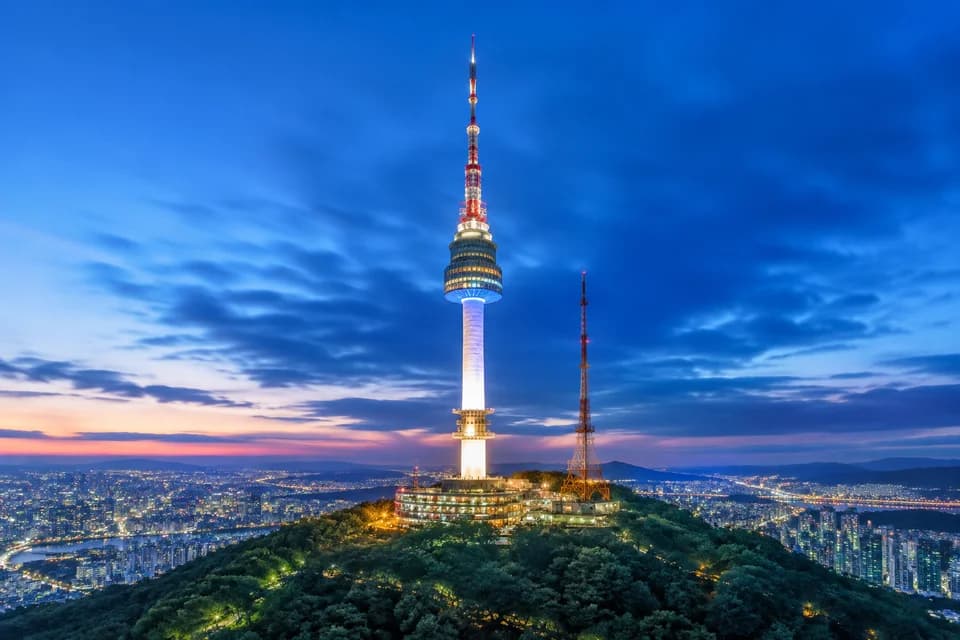
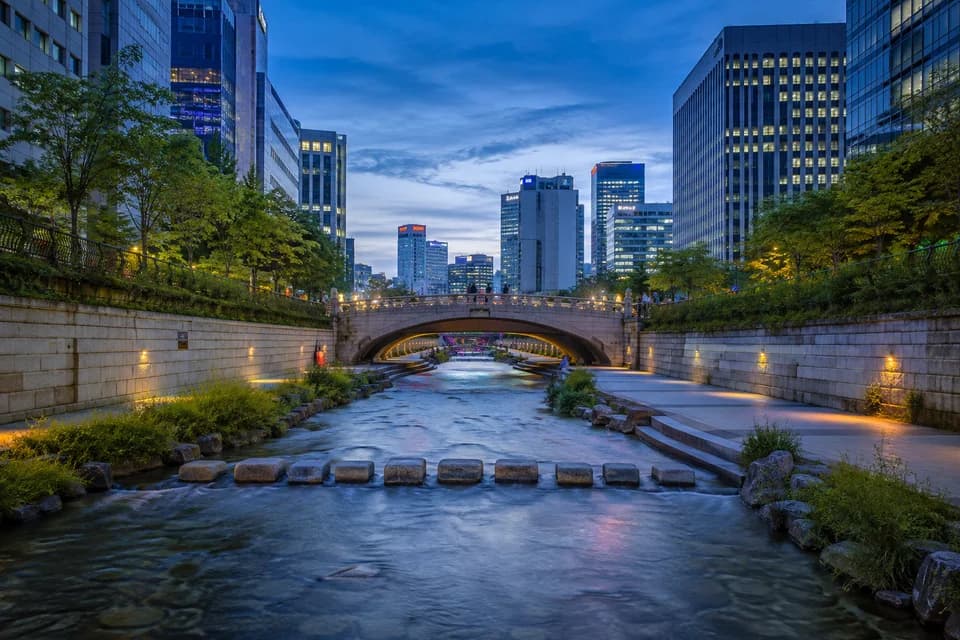
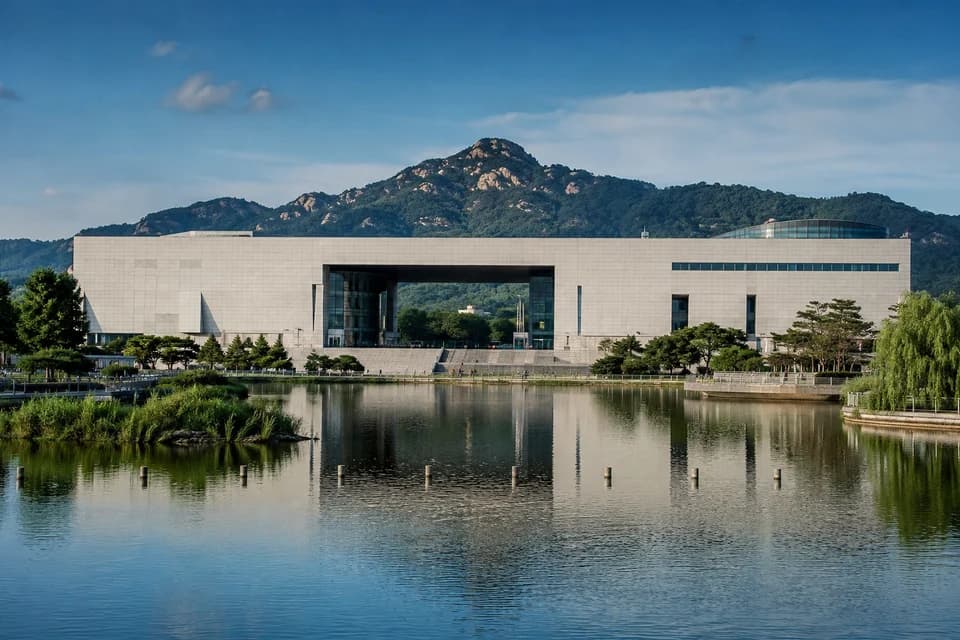
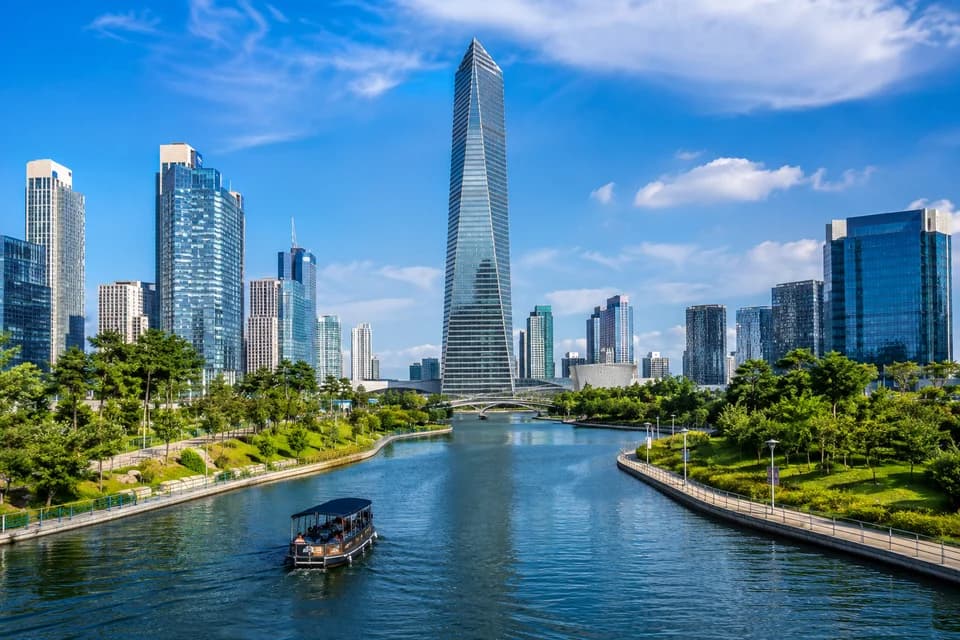
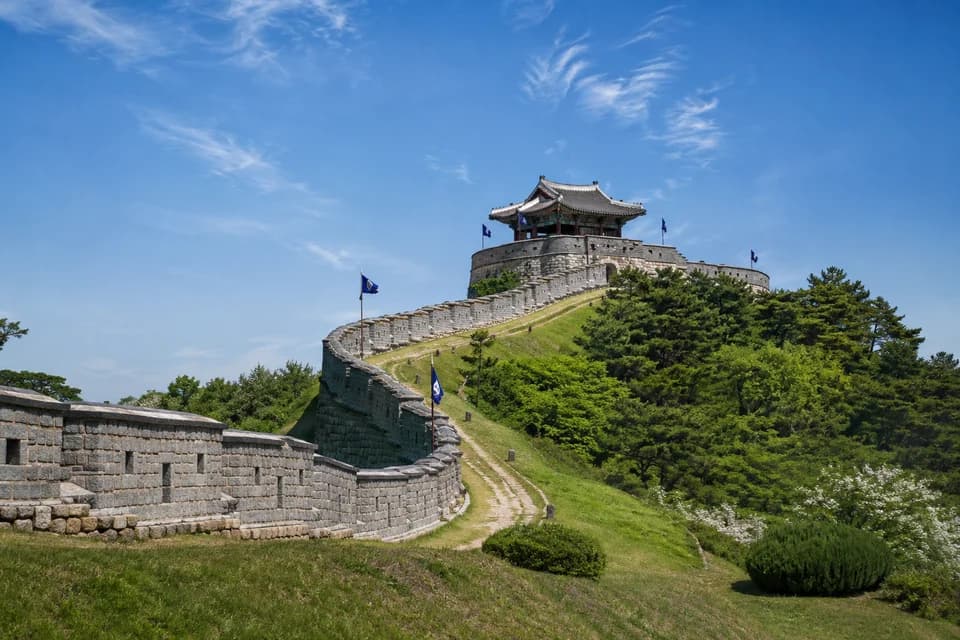
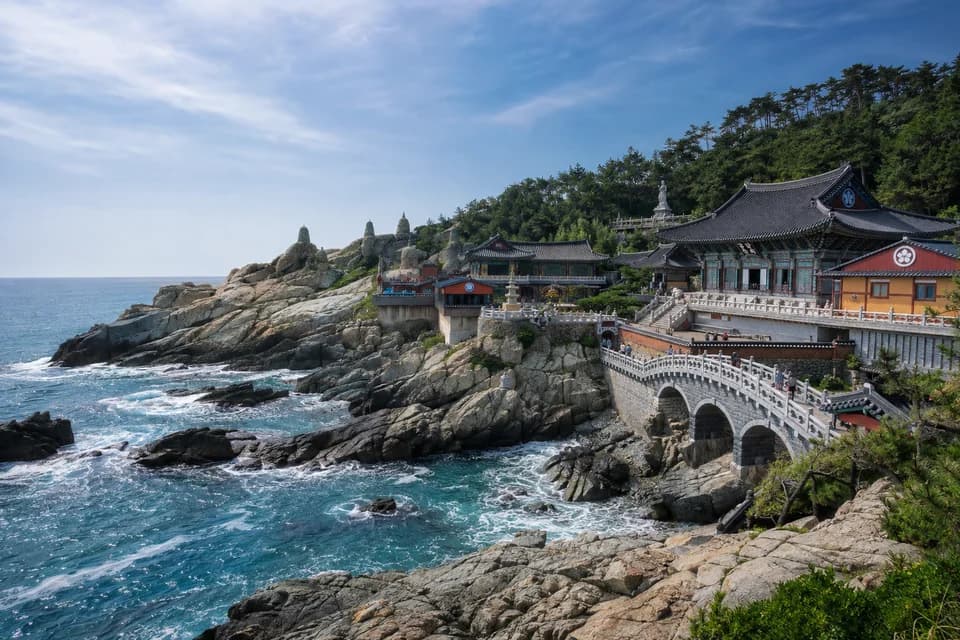
The Republic of Korea occupies the southern part of the Korean Peninsula. Palaces and traditional houses stand alongside skyscrapers, while mountains and coastlines offer a different pace beyond the city.
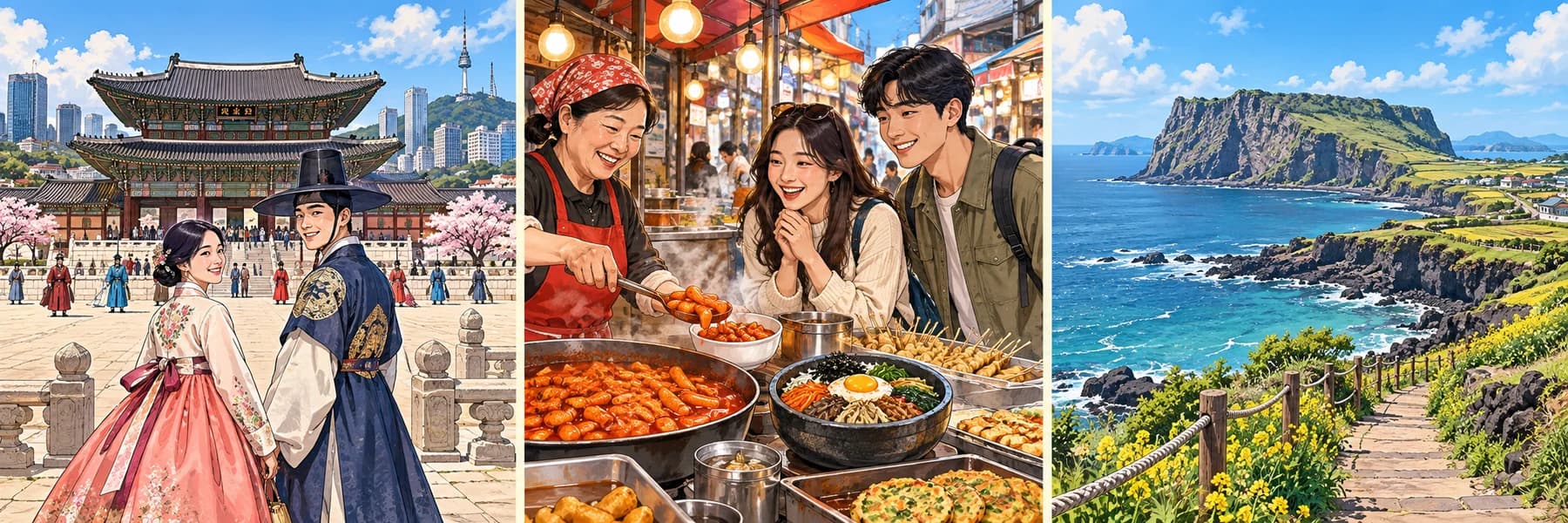
Past and present · A place at the table · Mountains and sea

Past and present

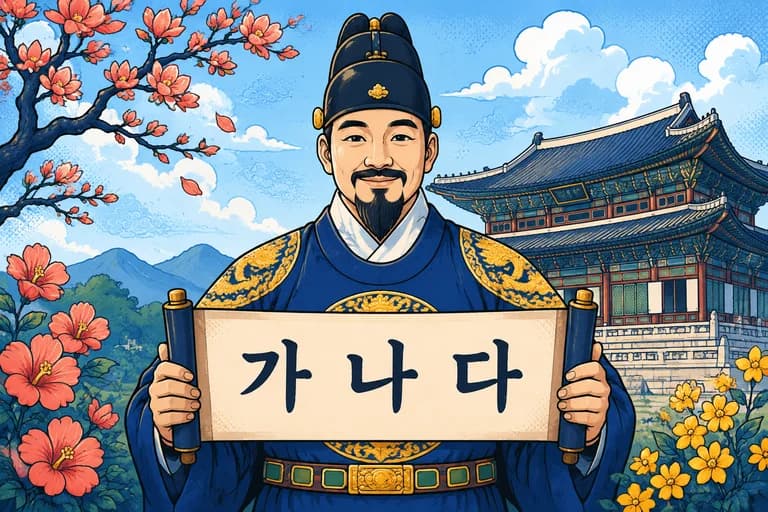
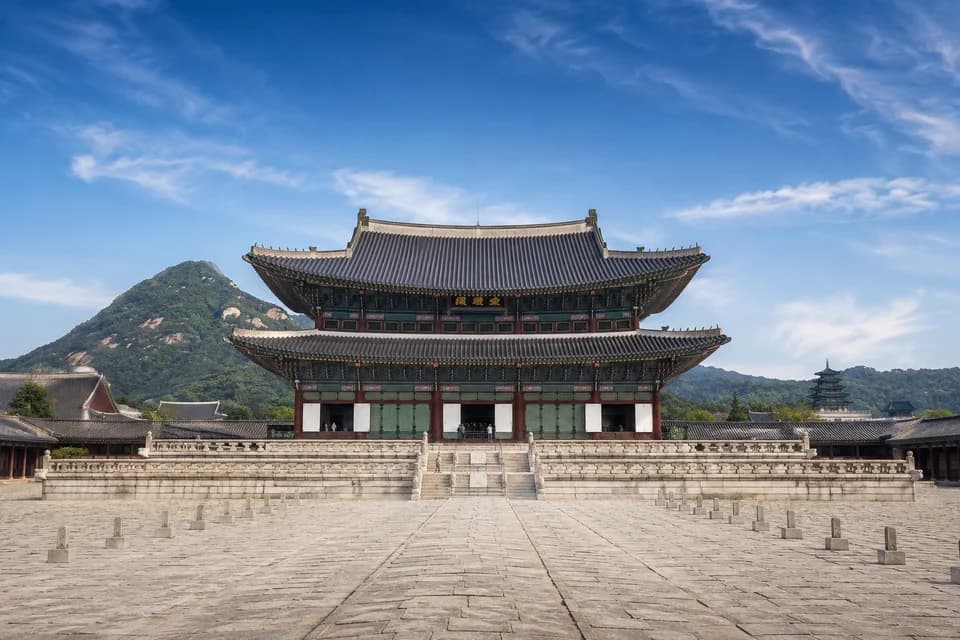
Seoul brings together royal palaces, markets and modern business districts. Gyeongbokgung and hanok neighborhoods reveal traditional architecture. Hangul is an important part of Korean culture, alongside the contemporary worlds of music, cinema and design.

A place at the table

Kimchi, bibimbap, soups and small side dishes called banchan bring variety to Korean meals. Markets serve tteokbokki and other street food, while cafés offer places to meet. Ask about ingredients and spice levels to find a dish you enjoy.

Mountains and sea

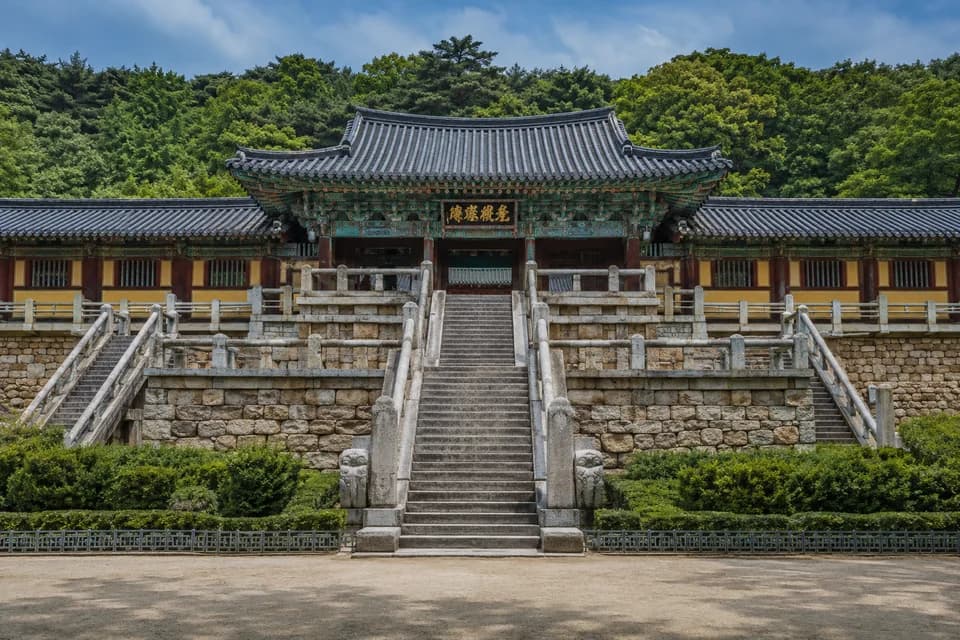
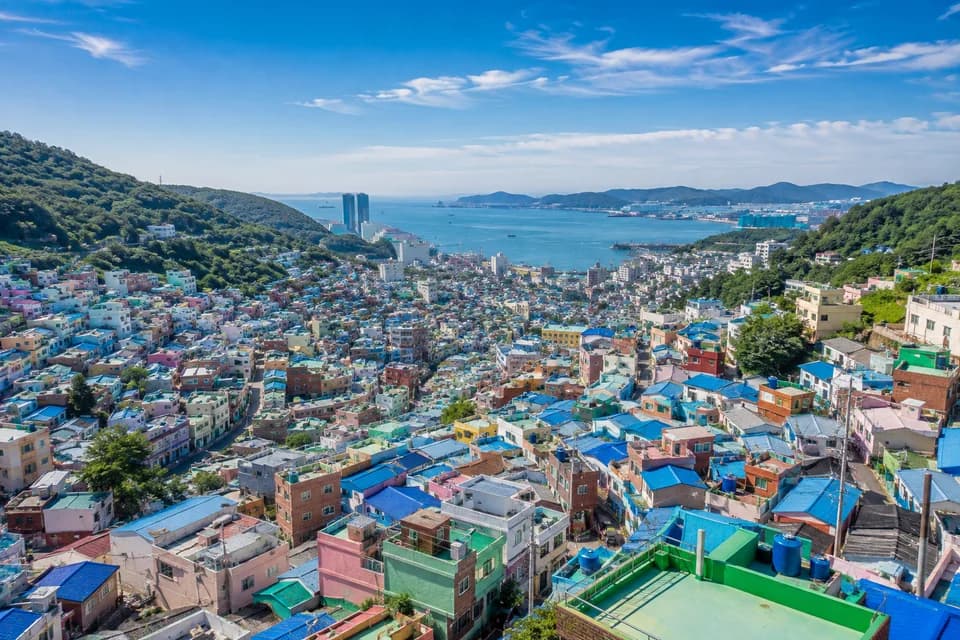
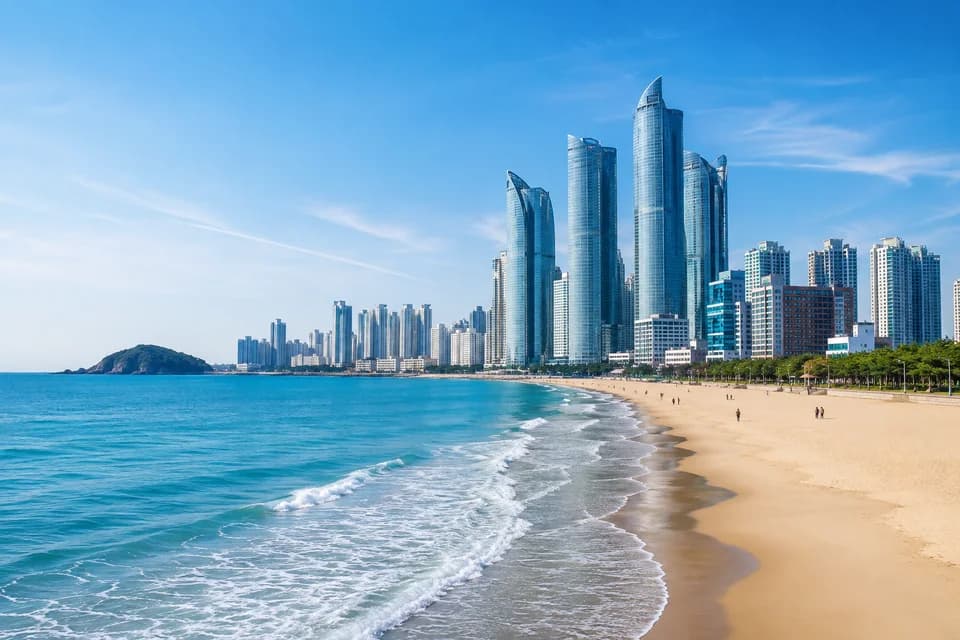
Busan combines urban life with the coast, Gyeongju preserves the heritage of ancient Silla, and Jeju is known for volcanic landscapes. Spring blossoms and autumn foliage give each season its character. A simple conversation can be the beginning of your own Korea — with ESX helping you understand each other.
South Korea’s flag: the meaning of every detail

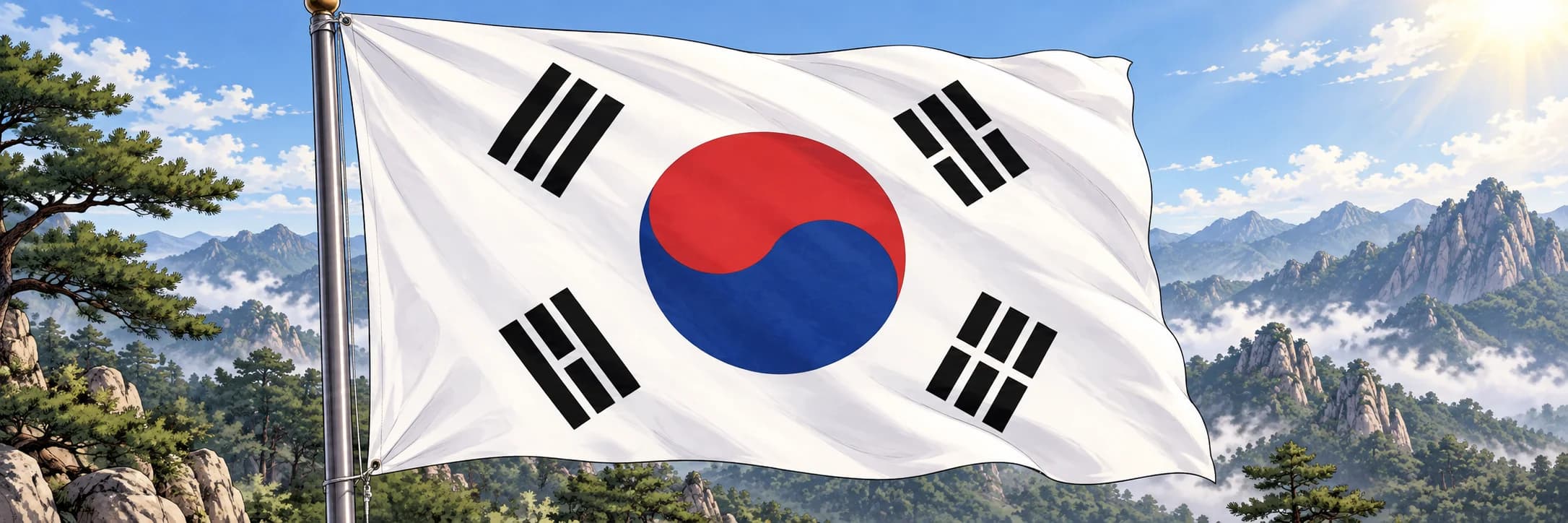
Taegeukgi (태극기) is the national flag of the Republic of Korea. Its white field, red-and-blue taegeuk and four black trigrams express harmony and the interaction of natural forces.

South Korea’s flag: the meaning of every detail

White background

White represents brightness, purity and peace. The background is itself a meaningful part of the design.

Red-and-blue taegeuk

The upper red portion represents yang; the lower blue portion represents yin. Their curved boundary unites complementary forces whose interaction brings change, rather than depicting good against evil.

건 · Geon — heaven

Upper left. Three solid lines represent heaven.

곤 · Gon — earth

Lower right. Three broken lines, each made of two segments, represent earth.

감 · Gam — water

Upper right. A solid middle line between two broken lines represents water.
리 · Ri — fire

Lower left. A broken middle line between two solid lines represents fire.

A trigram has three lines: solid lines are associated with yang, broken lines with yin. Positions refer to the front view shown above. The diagrams below are horizontal for clarity; the flag’s trigrams are tilted.

1882: why a flag was needed

The Taegeukgi emerged as Korea expanded international diplomacy. The 1882 treaty with the United States prompted the need for a national flag to represent the country. The exact flag used at the signing is not conclusively documented.

Who helped create it

Diplomat Park Yeong-hyo recorded preparing a version with a taegeuk and four trigrams during his September 1882 mission to Japan. He is associated with its recognizable design, but should not be described as the sole creator of every early version.

1883: official adoption

King Gojong proclaimed the Taegeukgi the national flag on March 6, 1883. Thus 1882 marks the familiar early design and 1883 its official adoption. After the Republic of Korea was established, standardized construction guidelines were announced on October 15, 1949.

Hanbok: Korea’s traditional clothing

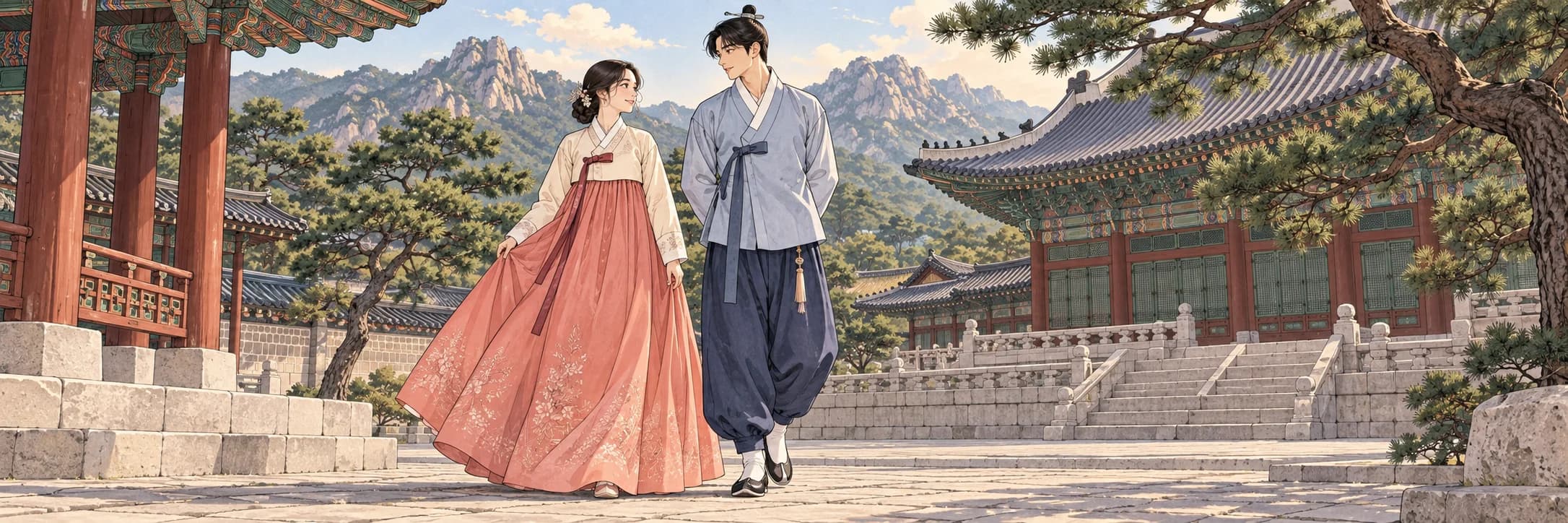
Hanbok (한복) is known for flowing lines, generous silhouettes and expressive colors. Its forms have changed with the period, season and occasion.

Hanbok: Korea’s traditional clothing

The main pieces

Jeogori (저고리) is the upper garment. Traditional women’s outfits pair it with a full chima (치마) skirt; men’s outfits with roomy baji (바지) trousers. Goreum (고름) ribbons fasten the top, while durumagi (두루마기) is outerwear.
When it is worn

Hanbok is especially visible at Seollal, Chuseok, weddings and family celebrations such as a child’s first birthday. Wearing it can express respect for family and tradition.
A living tradition

Designers adapt hanbok for everyday life with practical lengths and contemporary combinations. Festive and casual versions differ, while familiar lines and details continue to inspire new clothing.

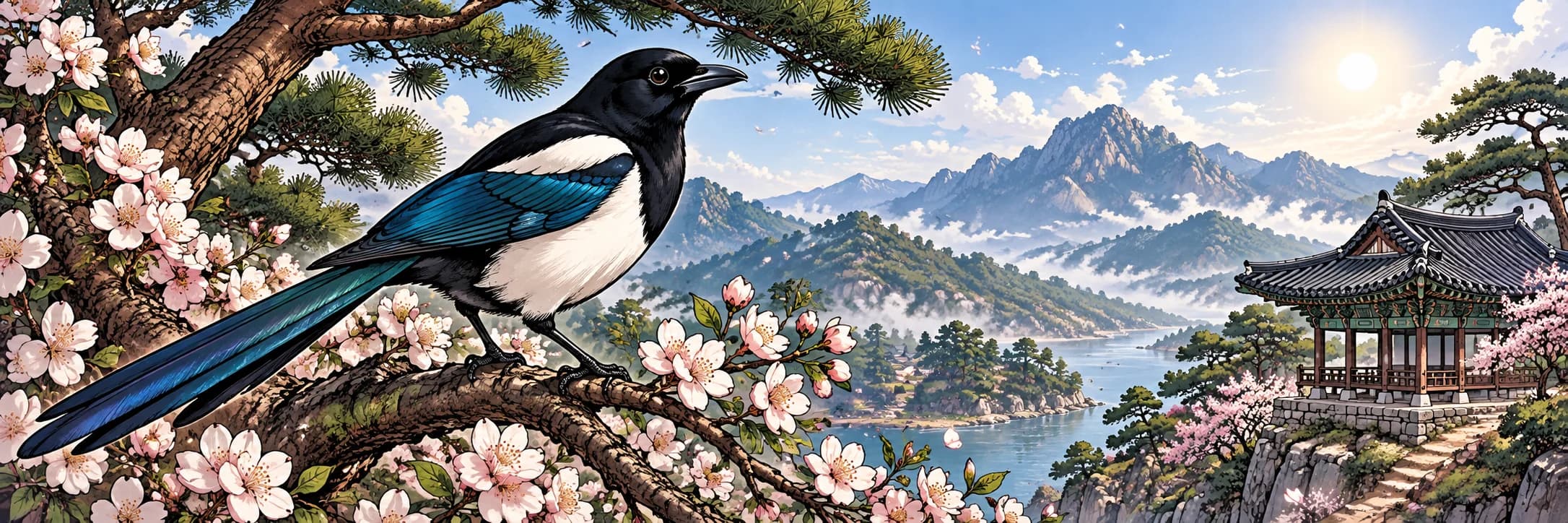
Magpie: a bearer of good news

까치 · Kkachi. In Korean tradition, the magpie is associated with joy and good news. It is a familiar character in minhwa folk painting.

Magpie: a bearer of good news

A well-known composition pairs a magpie with a tiger and a pine tree. The bird represents joy, the pine longevity, and the tiger protection against misfortune. Together they can express wishes for well-being.

Some interpretations also see social satire in the small bird facing a powerful tiger. Look at their expressions and poses: these paintings can be humorous as well as auspicious, and their meanings vary.

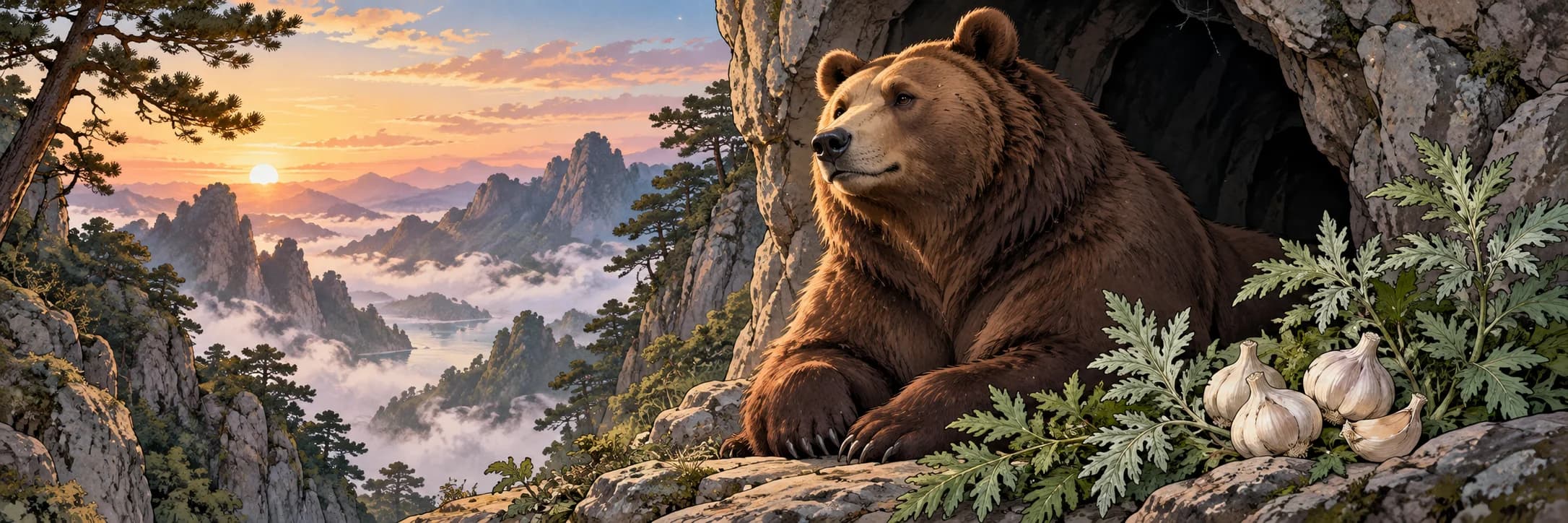
Bear: Ungnyeo and the founding myth

곰 · Gom. The bear is closely connected with Ungnyeo, the bear-woman who becomes the mother of Dangun in Korean mythology.

Bear: Ungnyeo and the founding myth

In a familiar version, a bear and a tiger ask Hwanung to make them human. He gives them mugwort and garlic and tells them to avoid sunlight for one hundred days. The tiger gives up; the bear succeeds and becomes Ungnyeo.

Ungnyeo and Hwanung later become the parents of Dangun, the legendary founder of Gojoseon. This is a foundation myth rather than a documented biography, exploring transformation and the relationship between heaven and the human world.

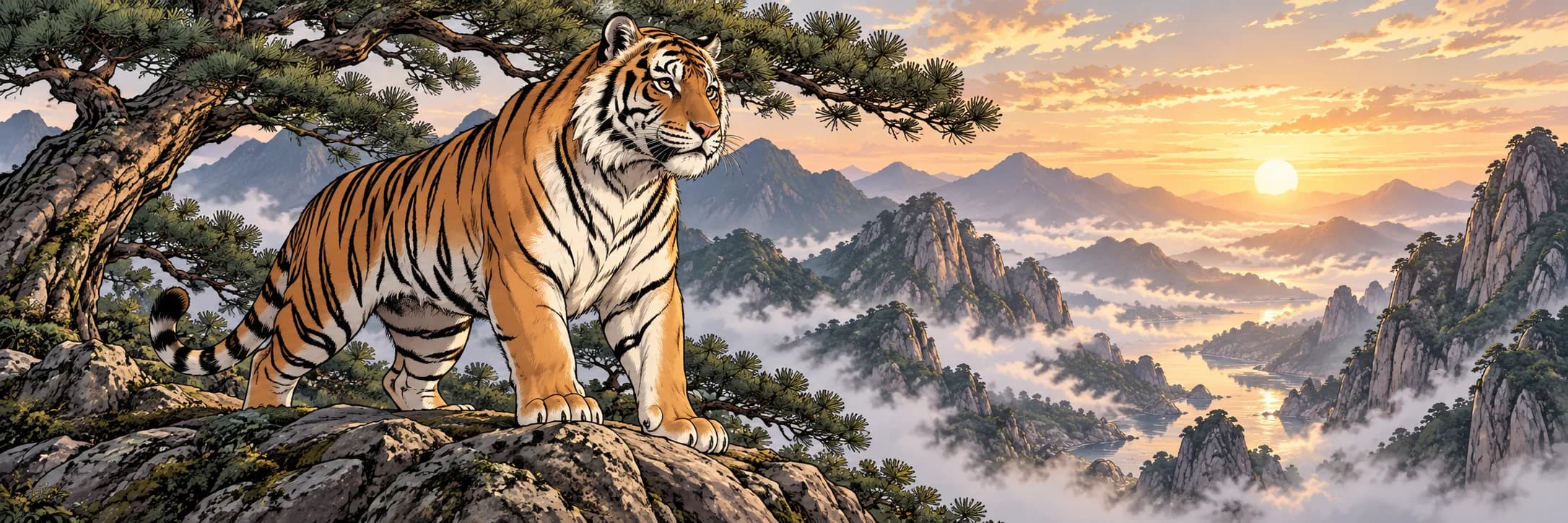
Tiger: mountain guardian and cultural icon

호랑이 · Horangi. Korean art presents the tiger as a protector, a companion of the mountain spirit and sometimes a comical character.

Tiger: mountain guardian and cultural icon

Tiger imagery was used to ward off misfortune. In paintings of Sansin, the mountain spirit, the animal accompanies the deity. In minhwa, large eyes and expressive faces can instead give it an approachable or humorous appearance.

The tradition continues in modern mascots: Hodori represented the Seoul 1988 Olympics, and the white tiger Soohorang represented the PyeongChang 2018 Winter Olympics.

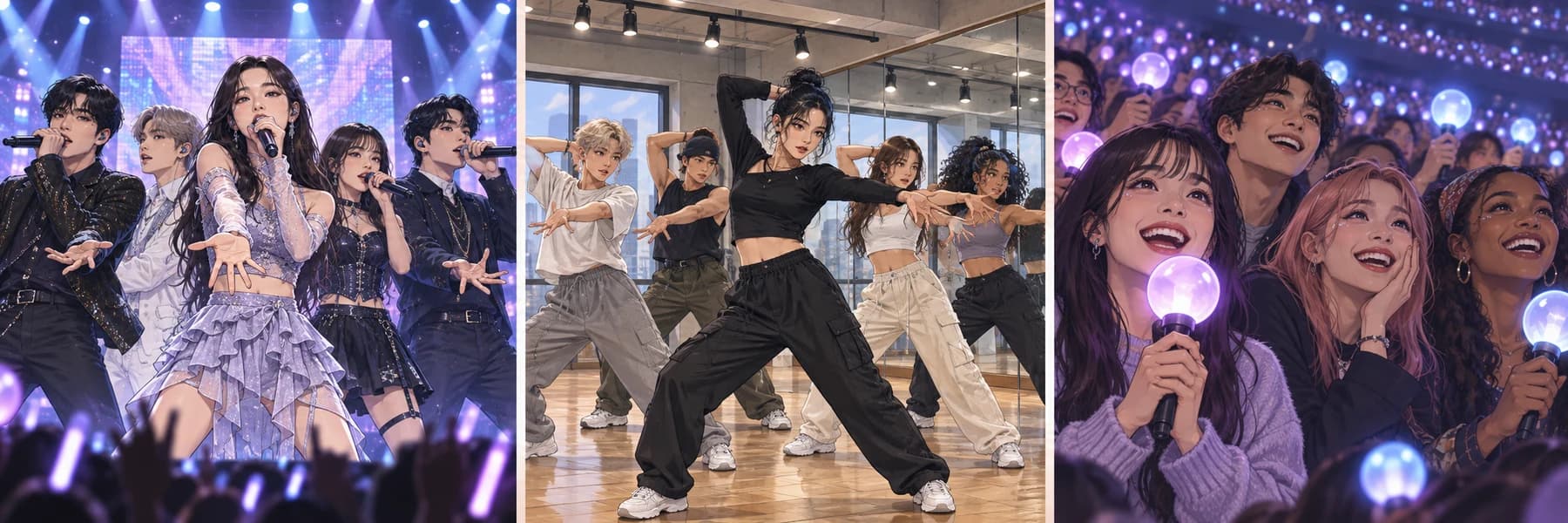
K-pop: music that brings people together

Korean pop music blends pop, hip-hop, R&B and electronic sounds. Songs are part of a visual world of music videos, choreography, stage outfits and concerts.

K-pop: music that brings people together

More than a song

Music and performance work together in K-pop. Choreography expresses the rhythm, while costumes and sets tell a story. Each release can explore a different concept. Beyond the big hits, there are ballads, solo projects and musical experiments.

A culture of participation

Fans discuss releases, learn dances, create covers and meet at concerts. Fandoms are communities where people share their enthusiasm and creativity. Music can also inspire an interest in Korean language, fashion and culture.

Discover your own K-pop

Try several artists and compare studio recordings with live performances. Dance practice videos reveal details that music-video editing can hide. A favorite song can start a conversation with someone from another country.

Korean cosmetics: discovering K-beauty

K-beauty brings skincare together with makeup, packaging design and everyday rituals. Its cultural appeal sits alongside Korean music, cinema and fashion. You can explore it at your own pace.

Korean cosmetics: discovering K-beauty

An everyday ritual

Textures range from light watery products to rich creams. Toners, essences and serums differ in ingredients and purpose; read the product description rather than relying on the category name. More steps do not automatically mean better results.

Recognizable formats

Sheet masks, cushion compacts and lip tints are familiar parts of K-beauty. A cushion holds product in a soaked pad, while tints add color to lips or cheeks. Matte, satin and radiant finishes offer different looks. Formulas vary between brands.

Choosing thoughtfully

Consider the texture, shade and format you want. Compare ingredients, volume, expiry dates and instructions. Packaging and online popularity do not guarantee a suitable match. Ask a shop consultant about the differences; ESX can help with the conversation.

Surgery in South Korea: consultation to recovery

Plastic surgery in Korea includes cosmetic procedures and reconstruction of tissues and function after injuries, congenital conditions or treatment. Start by clarifying your goals with a specialist.

Surgery in South Korea: consultation to recovery

A thoughtful consultation

Discuss indications, alternatives, expected outcomes and possible complications. Share your medical history, medicines and previous operations. A popular procedure is not suitable for everyone; decisions require individual assessment.

Checking a clinic

Medical Korea lists institutions registered to serve international patients. Registration and KAHF accreditation are different statuses; neither guarantees an outcome. Ask about the surgeon’s qualifications, anesthesia, total costs and medical interpretation.

Planning recovery

Arrange follow-up visits, contact with the clinic and care at home. Your doctor should advise on recovery and flying: surgery and air travel can increase blood-clot risk. Request clear written instructions. This article is general information, not a medical consultation.

South Korean holidays

2026 · All public holidays and special days off
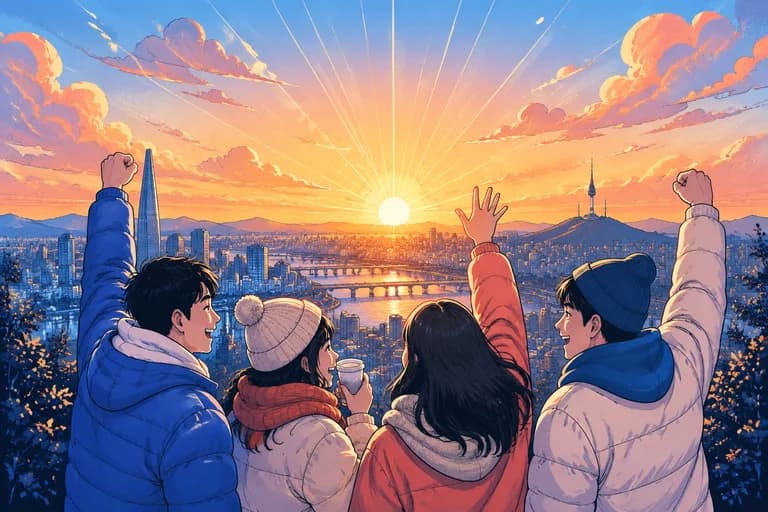
New Year’s Day
01

New Year’s Day

January 1

Official day off in South Korea.

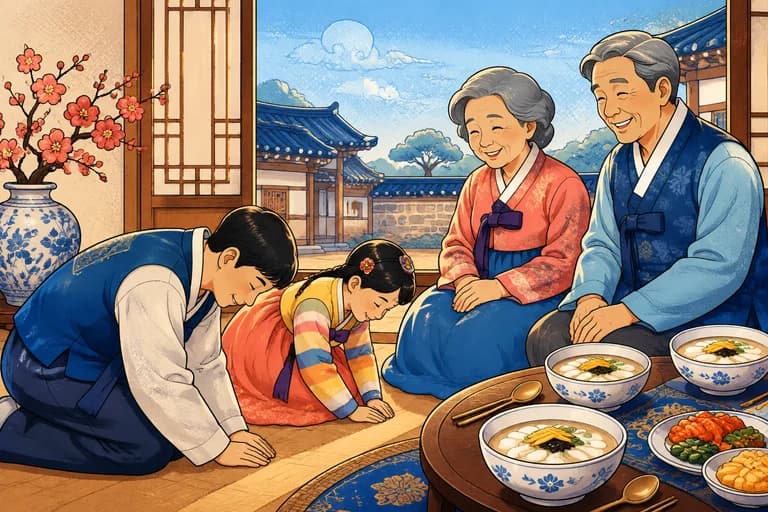
Seollal
02

Seollal

February 16 – February 18

Lunar New Year with family gatherings, respect for elders and tteokguk rice cake soup.

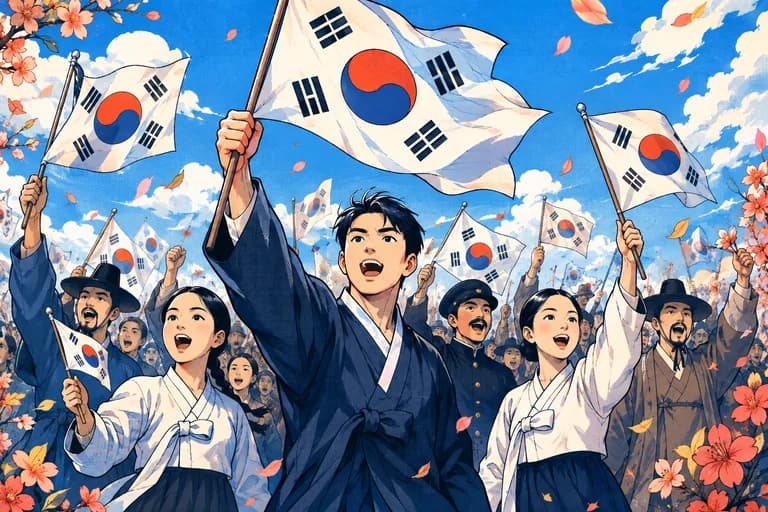
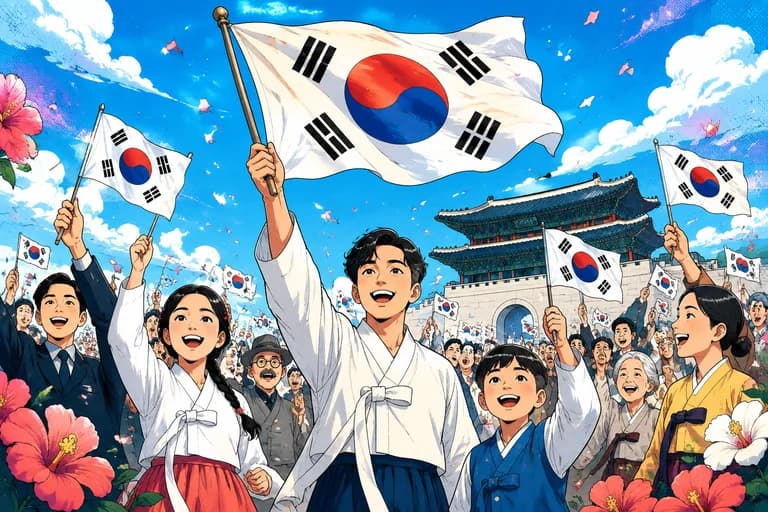
Independence Movement Day
03

Independence Movement Day

March 1

Commemorates the Korean independence movement that began in 1919.

Substitute day off: March 2

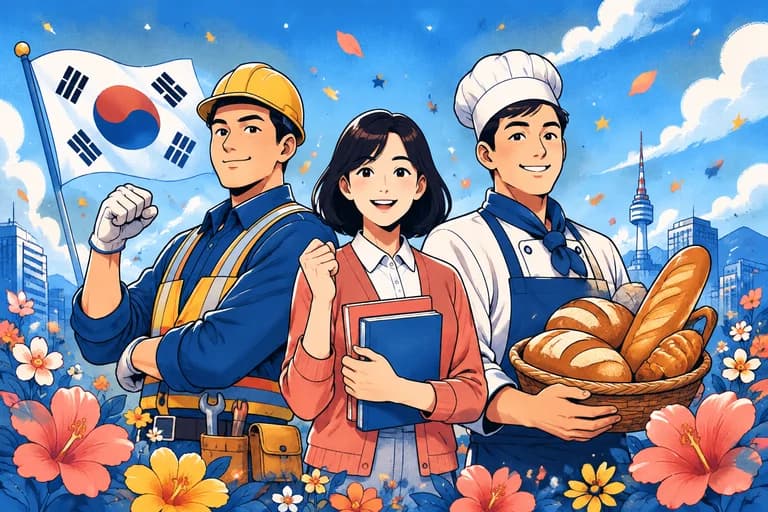
Labor Day
04

Labor Day

May 1

Official day off in South Korea.

Children’s Day
05

Children’s Day

May 5

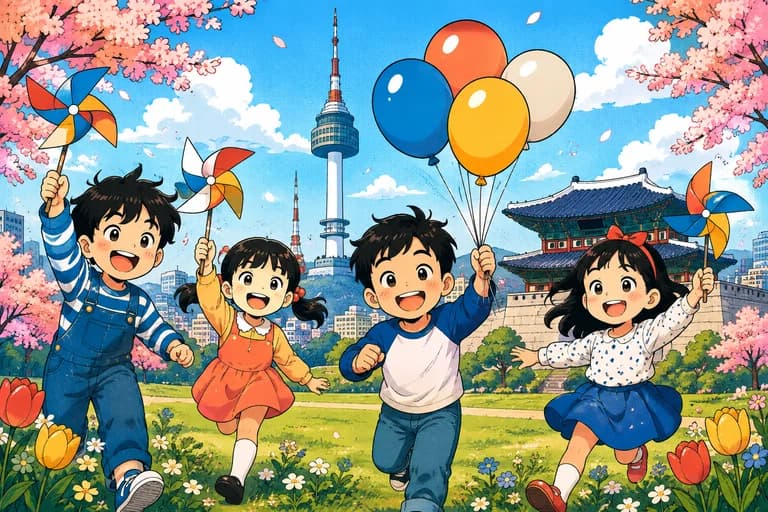
A family celebration with gifts, outings and activities for children.

Buddha’s Birthday
06

Buddha’s Birthday

May 24

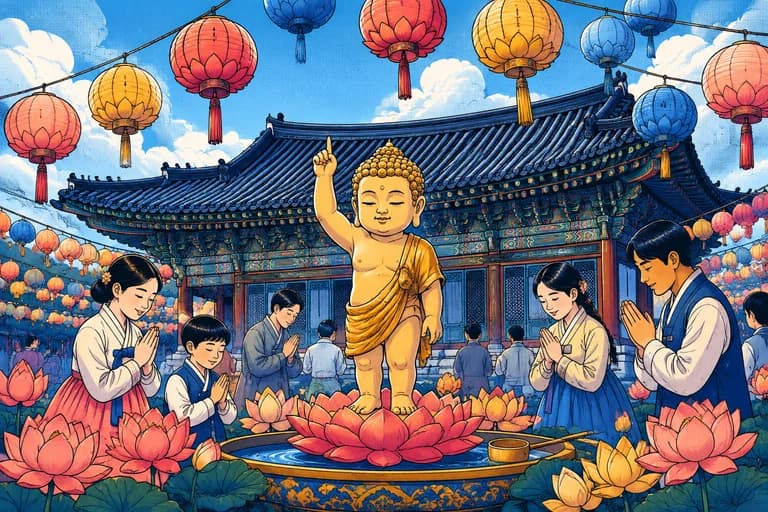
Temples display colorful lanterns on the eighth day of the fourth lunar month.

Substitute day off: May 25

Local Election Day
07

Local Election Day

June 3

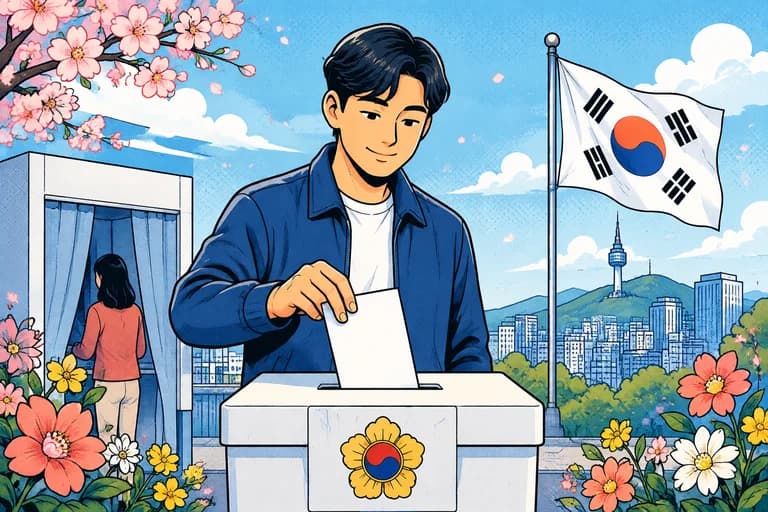
Official day off in South Korea.

Memorial Day
08

Memorial Day

June 6

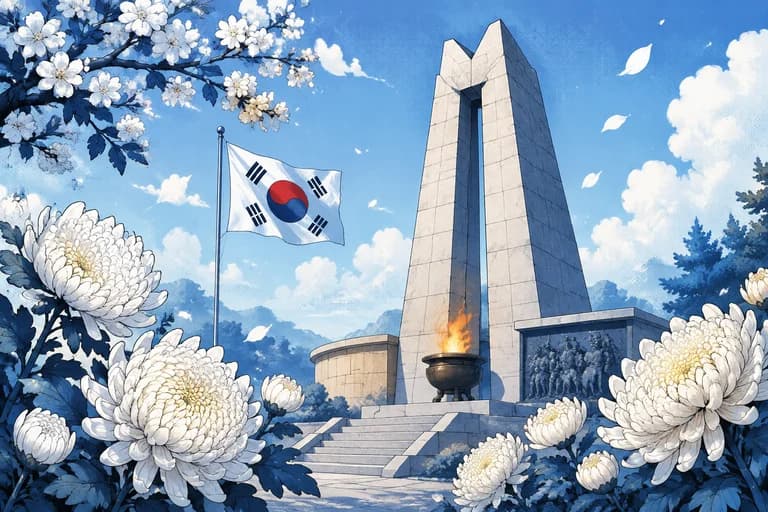
Official day off in South Korea.

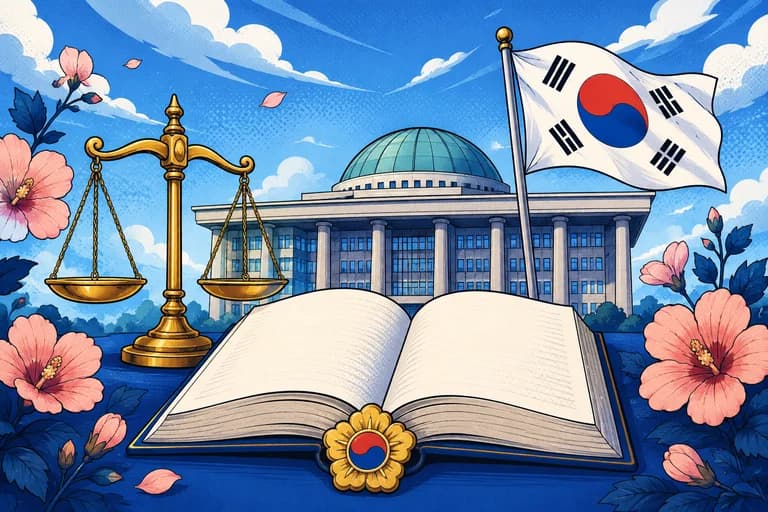
Constitution Day
09

Constitution Day

July 17

Official day off in South Korea.

Liberation Day
10

Liberation Day

August 15

Official day off in South Korea.

Substitute day off: August 17

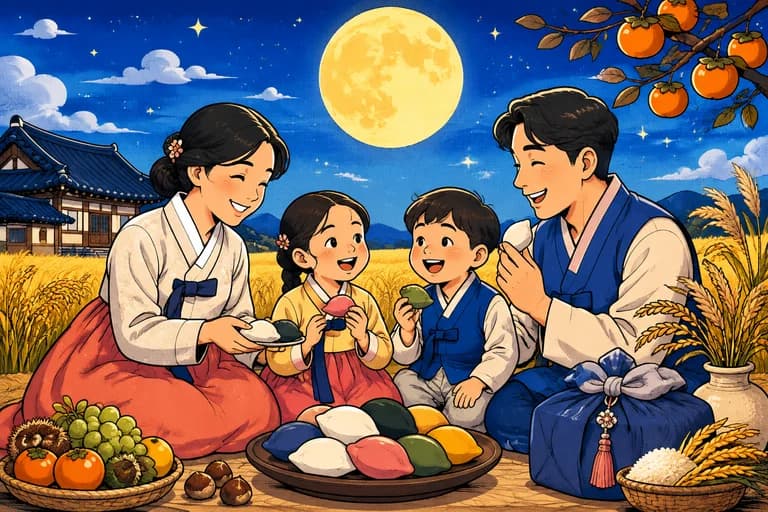
Chuseok
11

Chuseok

September 24 – September 26

A harvest celebration with family reunions, ancestral remembrance and songpyeon rice cakes.

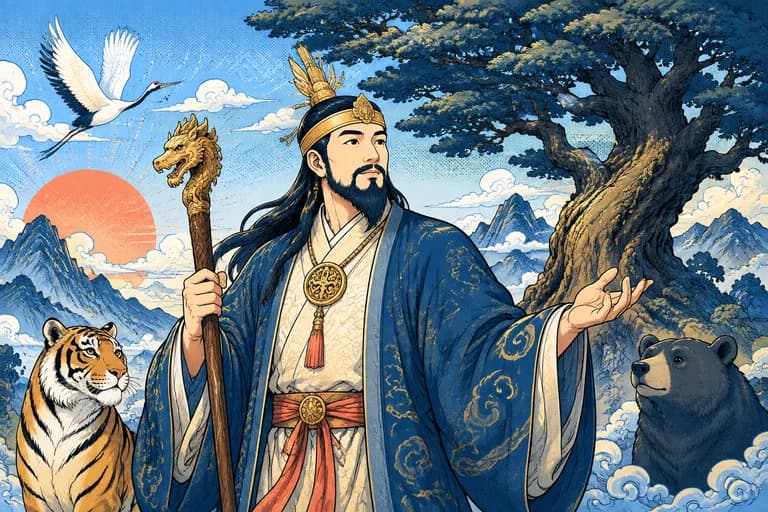
National Foundation Day
12

National Foundation Day

October 3

Official day off in South Korea.

Substitute day off: October 5

Hangul Day
13

Hangul Day

October 9

Celebrates the Korean alphabet and the cultural legacy of King Sejong.

Christmas
14

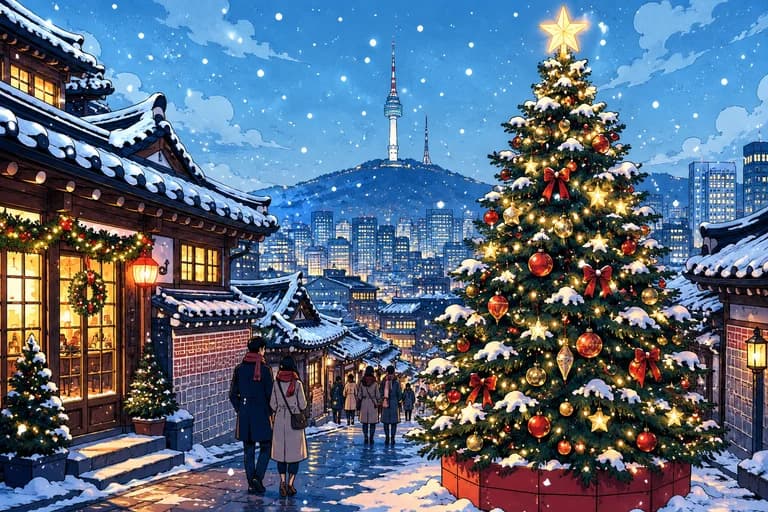
Christmas

December 25

Official day off in South Korea.

Dates for 2026. Substitute days off are listed on the cards.Travel guide · VISITKOREA ↗
✳ South Korea

16 places worth discovering

Our selection for your first journey through Korea.